Danube Orchestra
by Friederike Teller, Jana Weissteiner and Samo Zeichen
How can we listen to the voices of the Danube and create an open tool to encounter the multispecies soundscape?
About the Project
When we discover a place we often focus purely on our visual sensations. Our perception of acoustics, especially of non-verbal sounds often remains unconscious. In our project all three of us were curious to artistically research and experiment with sound. We wanted to listen to the river and all the beings, human and other-than-human, that it is connected to and open up a way to reconnect with the river in the public space.
In our project we want to create a public audio installation to collaboratively orchestrate a Danube soundscape by mixing different voices of the Danube. Additionally, through contact with a body of water connected to the device a person can start a conversation and add those sounds into the soundscape.
Objectives
Through experimental modes of listening we see the chance to encounter the river differently and to pay attention to our surroundings in a transformative way. The Danube Orchestra invites new intuitive ways of communicating through mixing and listening. Through being individually part of a collective soundpiece it helps us to process the networks we are all embedded in and gain knowledge about them. The process of (un)regulating the sounds, analogue to the historic regulation of the Danube, is a way to de-contextualise and actively re-contextualise relationships to other-than-humans.
Technicalities (Prototype)
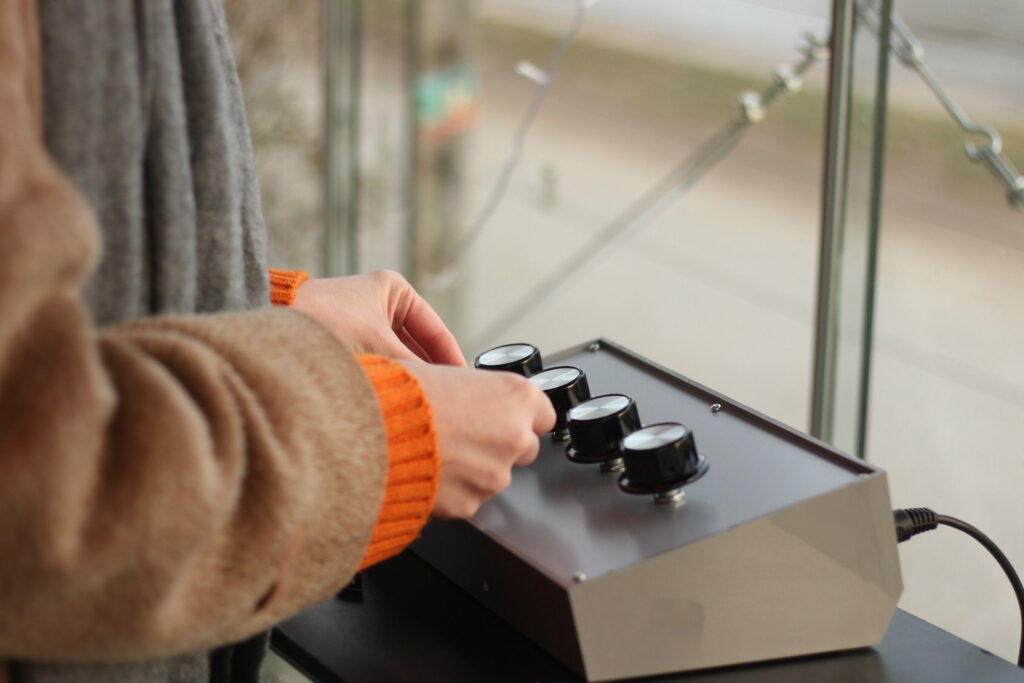
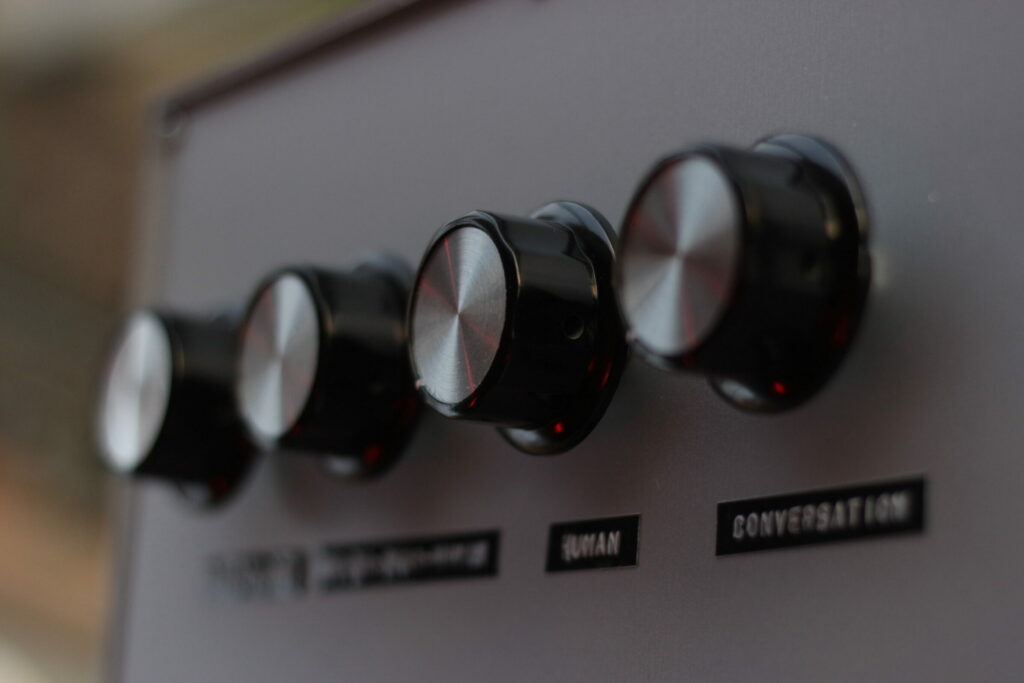
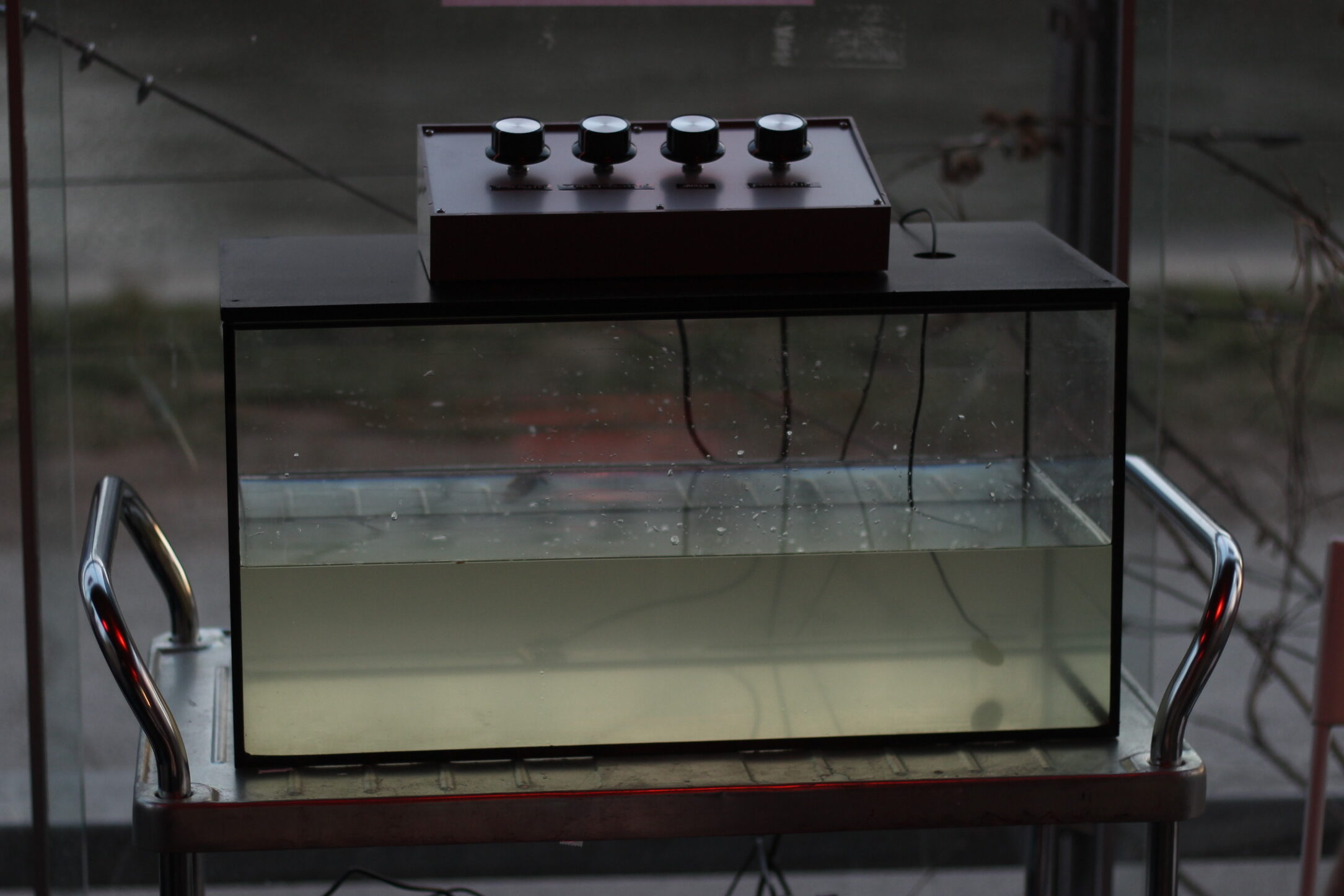
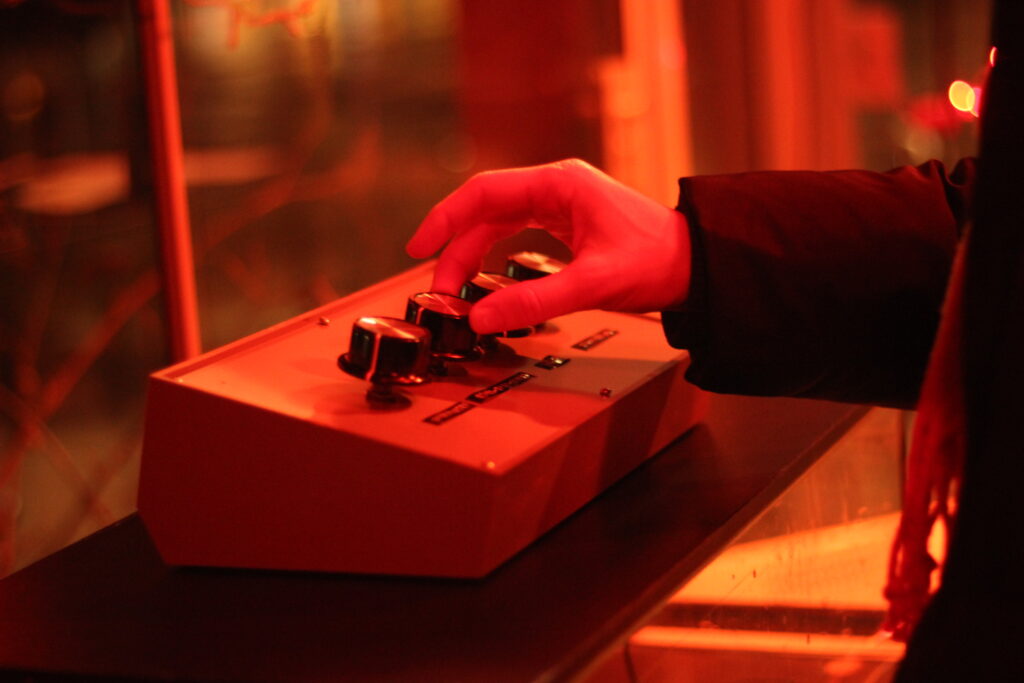
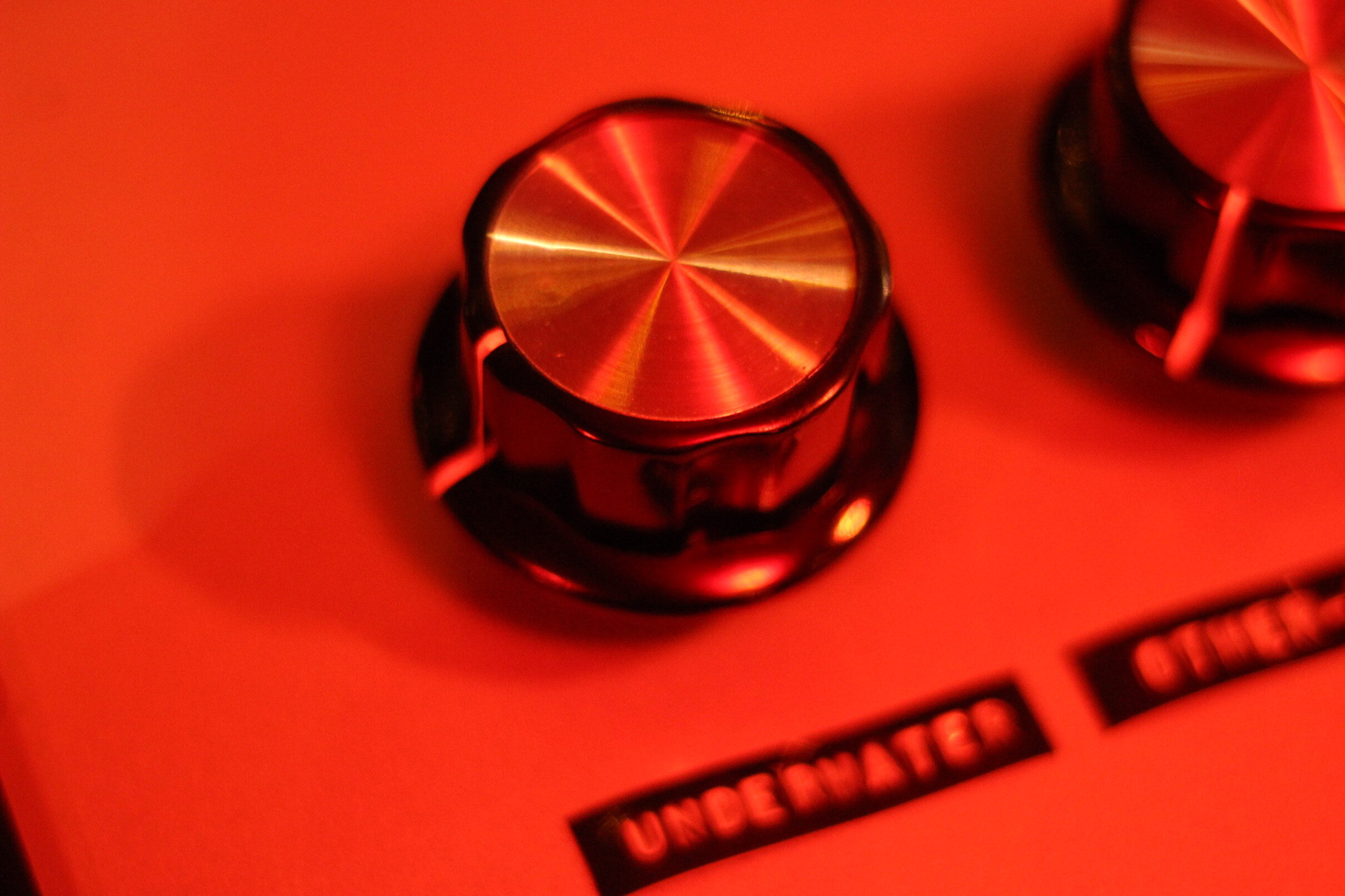
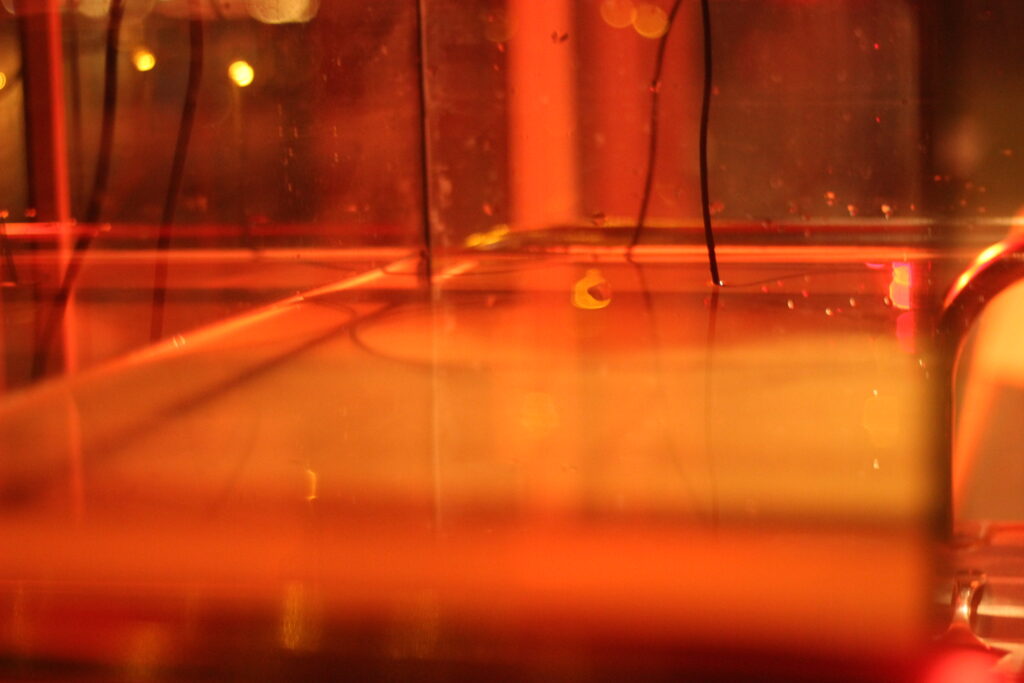
The mixing device has four rotary knobs. Each knob is assigned to a specific sound stream, which increases or decreases the volume. Whoever operates the knobs, is regulating the sounds. By choosing and regulating the channels one decides what is audible. The first knob is assigned to the water sounds of the Danube, symbolizing the steady flow of the river. Only when the first knob is turned on, the other streams play. The second knob contains other-than-human sounds, like birds, highways or boats. The third channel contains stories of people who live or work around the Danube – it is the stream of human actors. The fourth knob regulates a responsive sound generating live channel that offers the possibility of spontaneous interference (more details below). The audio device is placed on a transparent container filled with Danube water.
The conversation channel is fed with an external input signal (f.e. a contact microphone) which is placed in the water container. Sounds can be produced by tapping the walls. Through harder taps the water is moved and a conversation between the human and the water is initiated.
The four Streams
4. Conversation Stream
* click on the Streams to listen
Main Project Partners
Angewandte Studio Praxis Test
Contact
Friederike Teller, Jana Weissteiner, Samo Zeichen
danubeorchestra@student.uni-ak.ac.at